Understand the Chicago Startup Landscape in 2026
Chicago has become a strong base for technology startups across fintech, healthcare, logistics, real estate technology, SaaS, and AI-driven platforms. Moreover, many of these startups operate in industries that require compliance, structured workflows, and integration with existing systems. Because of this, these realities make generic software tools harder to rely on as companies scale. At the same time, founders in Chicago are dealing with tighter margins, more competition, and higher expectations from customers and investors. Consequently, software is no longer just a supporting function. Instead, it plays a direct role in speed, efficiency, and differentiation. When this happens, off-the-shelf tools begin to slow execution or limit flexibility, prompting startups to look for alternatives that give them more control. That is why custom software solutions are gaining momentum.What does Custom Software mean for Startups?
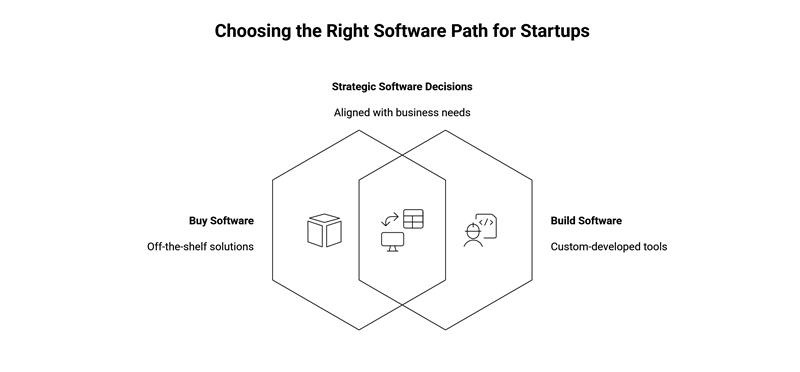
In 2026, startups do not focus on building large enterprise platforms from the beginning. Instead, they develop targeted software systems that address specific business challenges. In practice, teams design these solutions to streamline internal operations, automate workflows, enhance reporting, and deliver better customer experiences. Instead of adapting the business to fit the software, founders are choosing software that fits how their teams actually work. As a result, for software solutions for small businesses and startups, this approach reduces friction, eliminates unnecessary features, and supports faster decision-making. Because of this shift, custom software has become a practical tool, not a luxury.Build vs Buy Software: A Smarter Way to Decide
SaaS vs Custom Software for Startups
Why Scalability Is Driving Custom Software Adoption
Scalability is among the main motives why startups move towards custom development. Early-stage tools, first of all, work great until growth gets quicker. By then, startups already have performance problems, inflexible workflows, and systems unresponsive to new products or markets. For that reason, scalable software solutions are adaptable to the company’s growth. In practice, they enable teams to add features and to scale out services while integrating new ones without having to rebuild everything from the ground up. That’s why Chicago founders are coming to understand that investing in scalability early pays off handsomely down the line. Finally, custom software lets startups plan for growth, not react to it.Workflow Automation as a Growth Advantage
Startups that want to scale efficiently have made workflow automation software a must-have. Indeed, by 2026, companies will automate onboarding, reporting, approvals, customer communication, and compliance activities. But commercial automation tools can sometimes force businesses to adjust how they work. In the case of Custom Automation, it’s the opposite process. More specifically, it’s the automation and optimization of what you’re already doing. Therefore, this method cuts down on manual labor and human error, enabling lean teams to work closer to capacity. Automation, therefore, is a critical force that drives productivity in most Chicago tech startups.The Cost Reality of Custom Software vs SaaS
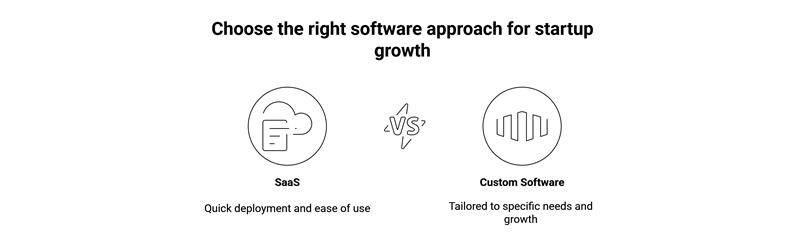
One of the most frequent concerns about custom software is, of course, cost. Although an initial investment is needed in custom development, long-term costs are generally quite different. Asteams grow, SaaS subscriptions proliferate, and new tools are added to bridge needs. This, in turn, leads to tool sprawl and unanticipated costs. For custom solutions, it can mean bundling many subscriptions into one. On a three to five-year horizon, a custom development can appear more cost-effective , particularly if your growth plan for startups is stable. Founders who look beyond the first year see the financial upside more clearly. Thinking long-term about your tech stack? When SaaS costs start adding up, custom development becomes a smarter investment. See how Supreme Technologies works with startups to build scalable, cost-effective software designed for growth.Security, Compliance, and Data Ownership
Startups are becoming more and more concerned about security and data ownership.” Risks, particularly for businesses holding sensitive customer or financial information, are presented by shared SaaS environments. As such, bespoke software provides startups greater control over access and data storage as well as their obligations to comply with regulations. That’s why this type of oversight is especially important for Chicago startups with an eye on regulated industries. In the end, custom systems offer greater ability to comply while keeping options open.When a Startup Should Choose Custom Software
Custom software rises as a viable alternative when you’re doing manual work to grow, feel handcuffed by what SaaS tools allow you to do, integration issues plague and add frequent costs, or the cost of using all these different types of software is increasing with no added value. It also makes sense, of course, when the business model depends on a special workflow or secret process. Here is a good rule of thumb: if the software IS your business, or plays an important role in the functioning of your business, or how it makes money, then building custom software should be on the table.Choosing the Right Custom Software Partner in Chicago