How Natural Language Processing (NLP) Revolutionizes Data Analysis and Insights?

Role of Natural Language Processing in Data Analysis 1

Data analytics assists in understanding complex information more easily. In this digital age, Natural Language Processing (NLP) changes everything making data analysis simple. With the use of NLP, we can go through large volumes of text data and pick out useful information in addition to identifying patterns. Ranging from examining sentiments to recognizing entities, NLP techniques increase the efficiency and precision of data analysis. Again, NLP enables computers to take data from, interpret it in as well as generate human language and this is useful for its administration in data analysis. 

For instance, when computers use NLP, they can handle large amounts of text easily, even if it’s not organized neatly. This helps find information quickly, drawing from fields like AI and machine learning. It’s a cool area where computers get smarter at understanding language.

Understand Natural Language Processing (NLP)

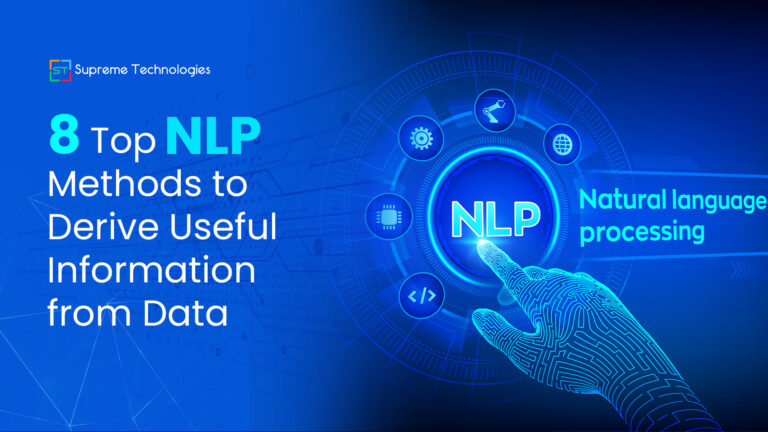
First, we will talk about things at a basic level. In other words, Natural Language processing refers basically to making machines capable of understanding human language. It is indeed correct! This involves understanding the meanings of words as they appear in different contexts, such as emails, social media posts, blogs, or articles among others. In data science, NLP methodologies use various patterns for analyzing large numbers of texts that have not been well organized; these include emails, and articles, among others. These are diverse operations including sentiment analysis; entity extraction; text summarization; and text categorization.

Let me clarify this with an example: NLP can decide on the feelings expressed through words or look out for people’s names as well as towns, for example. Its use alongside AI and machine learning cannot be overemphasized as it is practiced in sectors including healthcare.

Limitations of Traditional Analytics

How Natural Language Processing (NLP) Revolutionizes Data Analysis and Insights

It is difficult for many potential users because most data analytics tools are too complicated for those without programming knowledge. Nonetheless, Natural Language Processing (NLP) is the remedy by enabling individuals to interact with data in ordinary languages. This implies that even if you are not computer literate; you can now ask queries and provide responses using your own words. It is for this reason that data analytics has become more user-friendly and within reach for any person irrespective of the level of expertise in technology.

Can NLP Transform And Enhance The Field Of Data Analytics?

Here’s everything on how Natural Language Processing can transform and enhance data analytics.

Keep scrolling!

Improves accessibility through conversational interfaces

The role of NLP is to make data interaction methods more conversational. For instance, NLP allows us to talk to computers the way we talk to our friends. Through such interactions, users can easily retrieve data without necessarily having to know syntax or commands that relate to it. As such, there is less fear attached to retrieving data; meaning that both central and other teams can harness the power of analysis even if they lack some particular expertise.

User Insight with Sentiment Analysis

It is very important for any business that wants to get better customer satisfaction, to learn how customers feel about different things. Sentiment analysis is provided by NLP which is a method of interpreting expressed feelings from written text. Using customer reviews, comments, or support tickets companies can understand what users think of them and thus improve them effectively so they meet their needs exactly.

Efficient Data Extraction and Summarization

When it comes to unstructured data, NLP is the best algorithm for discovering essential details from emails, articles, text documents, social media posts, etc. This use helps businesses that use written content. With NLP, text summarization is now automatic – it saves a lot of time when you have masses of information to read through.

Role of NLP in Data Analytics

By combining Natural Language Processing (NLP) with data analytics, agencies can get valuable insights that were previously tough to obtain. Nowadays, NLP has become a powerful tool that helps shift towards a more data-driven approach. With the help of NLP, it’s easier to access and understand data which can further lead to better decisions. This simple integration helps businesses to stay updated with the latest data analytics trends and motivates innovation. Below, we will mention the role of NLP in detail:

Making Language Differences Easier To Understand

NLP acts as a bridge. It enables people to engage with data analytics even if they have non- non-technical background. This breaks down language barriers and makes sure that the insights are available to everyone promoting a culture of collaboration.

Encouraging Innovation Through Making Things Accessible To More People

Entities can foster creativity by simplifying information accessibility with Natural Language Processing (NLP.) This can trigger mixed-skilled workers from varied departments to creatively solve problems that enhance data-driven decisions at all levels within organizations. Applicability of NLP in this scenario means that it converts data from individuals into a collective asset that allows teamwork among employees leading to innovative practices alongside the attainment of mutual objectives of such teams.

Streamlining Business Processes With Automation

Why is one stuck with abstract processes when we have automation? So far so good. But beyond routine inquiries, NLP enables computer systems to understand and communicate with humans in their natural language. This has also found applications in several businesses including customer support and data entry where it is used to automate tasks. 

Using NLP, computers can do this kind of job on their own without engaging human beings in it. And it seems we have not been working hard enough or something still needs clarification sometimes.

Conclusion

Typically, NLP is a powerful tool that can process and analyze data easily, especially for dynamic industries. With NLP, decision-makers have real-time insights that are based on the latest information available, which enables them to make better decisions. Apart from this, they can assess even minute data, enabling them to respond promptly to the change scenarios. All of these make NLP a strategic asset that drives informed and timely decisions throughout the companies.

Get more updates on our Blogs

The 5 Game-Changing Roles of AI in Software Testing in 2024

10fa78f3 9320 4de5 bfe9 499736bf198d

AI is game-changing in software texting, making it faster, smarter, and more effective. With the help of AI, testers can automate tasks easily, find potential issues faster than before, and look for vast amounts of data quickly. As we move into 2024, AI is becoming more important in testing. It’ll help you do even harder tasks, so they can release great software faster and with fewer problems. Below, we’ll talk about how AI improves software testing for everyone.

But first, let’s discuss what AI-based testing is!

AI-Based Testing

AI-based testing is a method of testing software that uses AI and Machine Learning (ML) algorithms to make the testing process more efficient and effective. Its main goal is to use logical reasoning and problem-solving methods to improve the overall testing process. In AI-based testing, AI-driven tools are used to execute tests without any human intervention. This means that data and algorithms are used to design and perform tests automatically.

5 Amazing Roles Of AI in Software Testing In 2024

The 5 Game-Changing Roles of AI in Software Testing in 2024

In the ever-evolving landscape of software testing, one revolutionary force is reshaping the way we ensure quality: Artificial Intelligence (AI).

AI-driven tools for software testing can easily check bugs, inconsistencies, and several issues that manual testing could require days or even months. Moreover, these tools can likewise mimic client conduct to guarantee the final result is of the greatest conceivable quality. Here, let’s find out how AI can help the testers to streamline their tasks:

Automated Test Case Generation

One of the key roles of AI in software testing is its ability to generate test cases automatically. Generally, most of the test cases were created by testers manually which was a time-consuming and error-prone process. 

Additionally, AI algorithms can analyze software’s requirements, designs, and also code to generate comprehensive test cases, covering various scenarios and edge cases.

Moreover, AI can prioritize and optimize test cases based on various factors like risk, code complexity, and previous test results. This enables testers to focus their efforts on the most critical parts, increasing the effectiveness of the testing process while minimizing redundant or low-impact tests.

Defect Prediction and Prevention

AI in software testing easily predicts and prevents defects before they can occur. By checking historical data, code changes, and other factors AI models can predict the defects in certain areas of the codebase. By getting this information testers can write cleaner and create strong code from the outset.

Self-Healing Test Automation

AI-powered test automation frameworks can automatically adjust test scripts based on the changes in the application’s user interface or functionality. Then, such frameworks use machine learning to determine and modify test scripts which lessens the need for manual updates and help, ensuring that automated testing is perfect and reliable.

Natural Language Processing (NLP) or Requirements Analysis

Typically, NLP algorithms assist computers in understanding and reviewing documents that are written in everyday language. They can easily address mistakes and unclear things in the requirements, ensuring everything makes sense. This way, it can make the perfect test for software so it works well and does not have any issues.

Performance Testing and Optimization

Performance is one of the critical aspects of any software application and AI is playing an important role in ensuring optimal performance. The AI-powered tools analyze app performance data, determine performance bottlenecks, and also provide several insights for optimization. Such tools can simulate real-world usage scenarios, stress test the application, and identify areas for improvement. Doing so ensures a smooth and responsive user experience.

Advantages of AI in Software Testing

AI offers numerous benefits in software testing below we will mention one by one:

Improves Test Coverage and Efficiency

Because of time conflicts and human limitations, traditional testing methods usually struggle to cover all possible things during the software development process. However, machine learning algorithms can automatically generate various test cases such as uncommon scenarios and edge cases, lowering the risk of undetected critical issues. Apart from this, AI in software testing can easily replicate test cases, so it can minimize false positives and negatives in defect identifications.

AI Can Decrease Manual Efforts And Faster Testing Cycles

AI-powered tools can automate time-consuming tasks. These are:

  • Creating test cases
  • Preparing test data
  • Updating test scripts

Well, this automation improves productivity and enables testers to focus on other complex tasks where human expertise is crucial. 

Moreover, AI in software testing can identify the most relevant tests based on code changes as per developer feedback. The result is a dramatic time reduction in your software development timeline, enabling software teams to rapidly release updates and new features.

AI Can Improve Efficiency in Defect Detection

Well, traditional testing methods may miss minor or complex defects in large and tough codebases. This is where AI can help, with large algorithms it can easily identify hard-to-detect issues.

AI analyzes historical data and current software metrics to find error-prone areas. This way, testers can focus on parts of the applications that mostly have defects.

Moreover, AI-driven tools can also learn from past testing cycles and improve them to detect defects. By doing so, it will easily adapt to evolving software complexities and maintain top-quality standards. 

AI Can Enhance User Experience

AI in software testing can improve the user experience. Generally, AI-driven tools can simulate real-life user scenarios and interactions which can help in gaining valuable insights into the experience that users have while using your software. It involves testing under several conditions and on multiple devices, ensuring the software performs the best in all expected user environments.

Apart from this, AI can determine usability issues like complex navigation, and unresponsive elements which are tough for testers to determine. By knowing these complex issues, AI helps you to create more user-friendly and intuitive software applications, offering a better user experience.

Conclusion

In the year 2024, the role of AI in software testing has changed significantly. It offers numerous benefits to agencies striving to deliver top-quality software in today’s competitive market. AI helps with making tests automatically, deciding which tests are most important, predicting issues, fixing test problems by itself, and checking if the software meets the requirements using natural language processing. By using AI in these ways, companies can make their testing work better, faster, and more reliable. This can lead to happier customers and more successful businesses.

Discover more about our top-notch services at Supreme Technologies.